From lush green coverings to multi-hued exteriors, these landforms draw in visitors with their vivid topography.
1. Rainbow Mountain, Peru
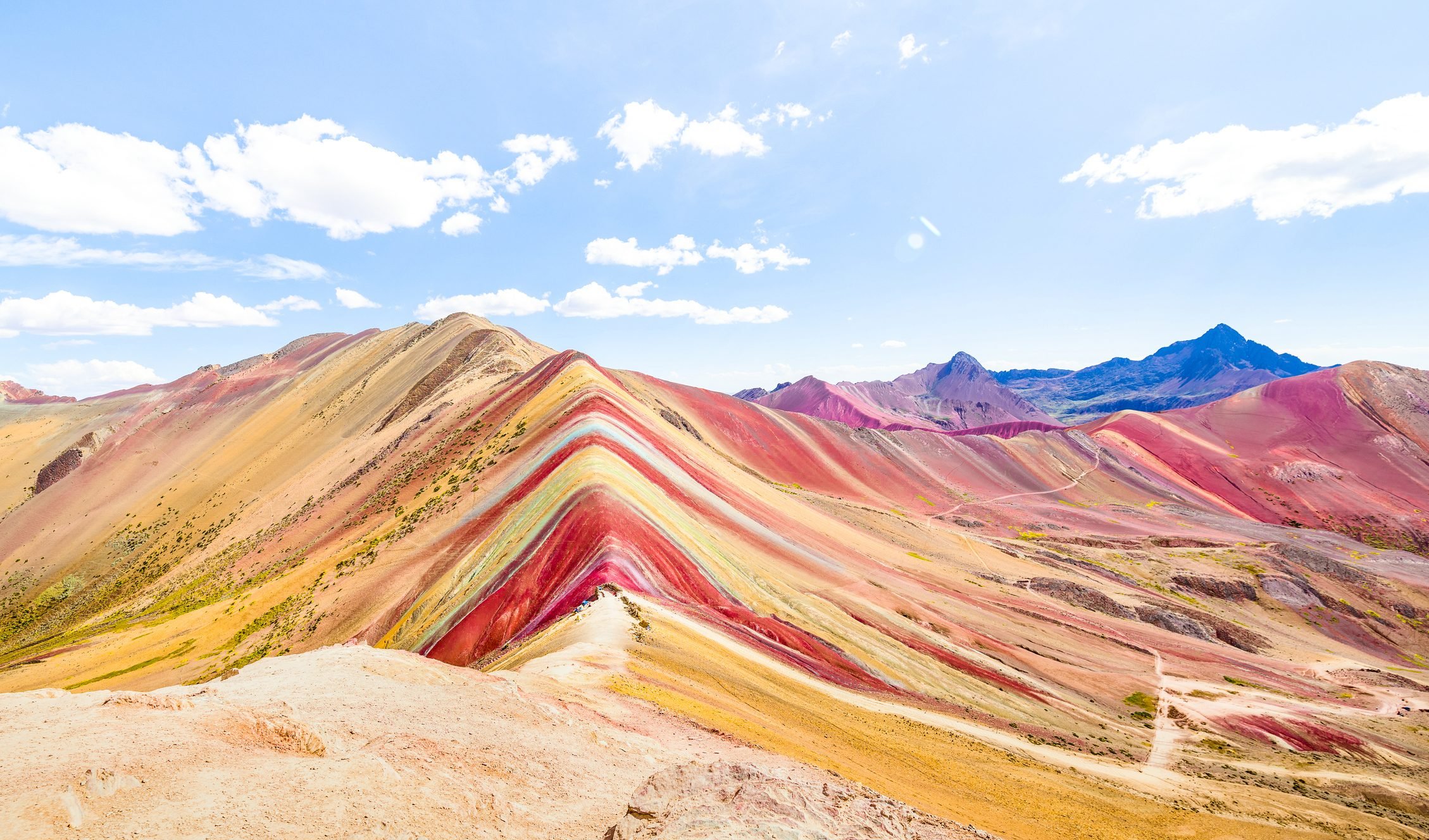
Also known as Vinicunca or Montaña de Siete Colores (the Mountain of Seven Colors), this colorful mountain near Cusco became well-known throughout the world in recent years. It attracts 1,500 visitors daily during Peru’s high tourism season. The mountain’s rainbow look is revealed as the surrounding snow begins to melt, unveiling its true colors. In part from environmental conditions, over time marine, lake, and river sediments formed layer deposits resulting in turquoise, gold, red, and fuchsia colors. Visits to Rainbow Mountain often involve full-day excursions through tour operators, where it’s best to be physically able to handle high altitudes. Consider the less-traveled yet equally colorful Cordillera de Colores Palcoyo, also within the Cusco region.
2. Landmannalaugar Mountain, Iceland
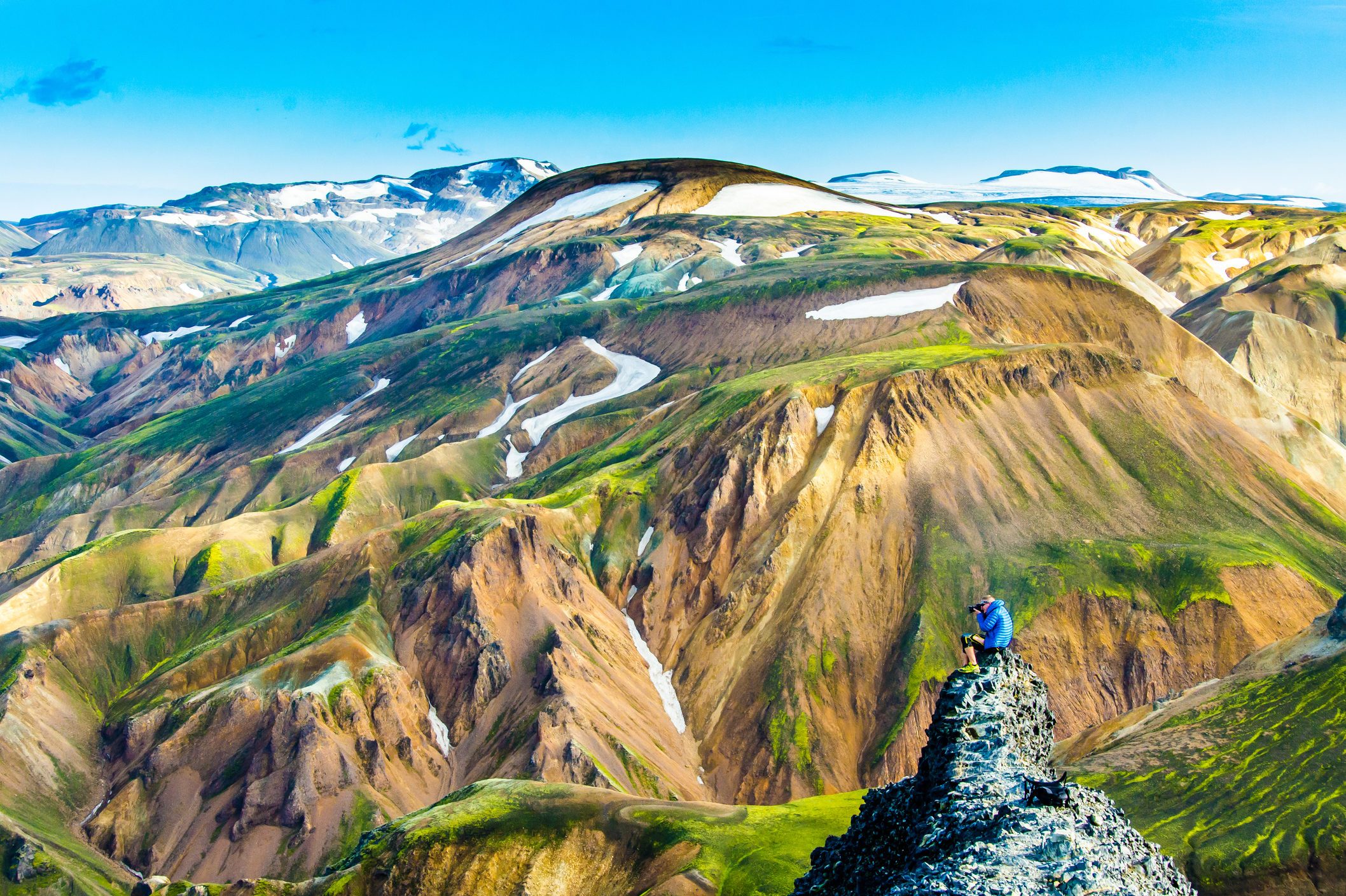
Iceland is known for its diverse topography and this mountain in the Fjallabak Nature Reserve based within the country’s Southern Highlands fits in quite brightly. Its hues come from rhyolite, a type of rock producing quite the range of shades, from red, pink, and green to blue and golden yellow. Collectively, Landmannalaugar Mountain is a colorful mountain that makes for a picture-perfect backdrop to be captured with your smartphone lens. Aesthetics aside, Landmannalaugar is touted as a great hiking destination, where trekkers can venture along its three major trails: Mount Brennisteinsalda, Mount Bláhnjúkur, and Ljótipollur, the latter is a crater lake. Speaking of water, after a long stretch, weary bodies can relax within the warm streams heated by geothermal energy, which could be why Landmannalaugar is also known by the moniker, “Pools of the People.”
3. The Pitons, St. Lucia
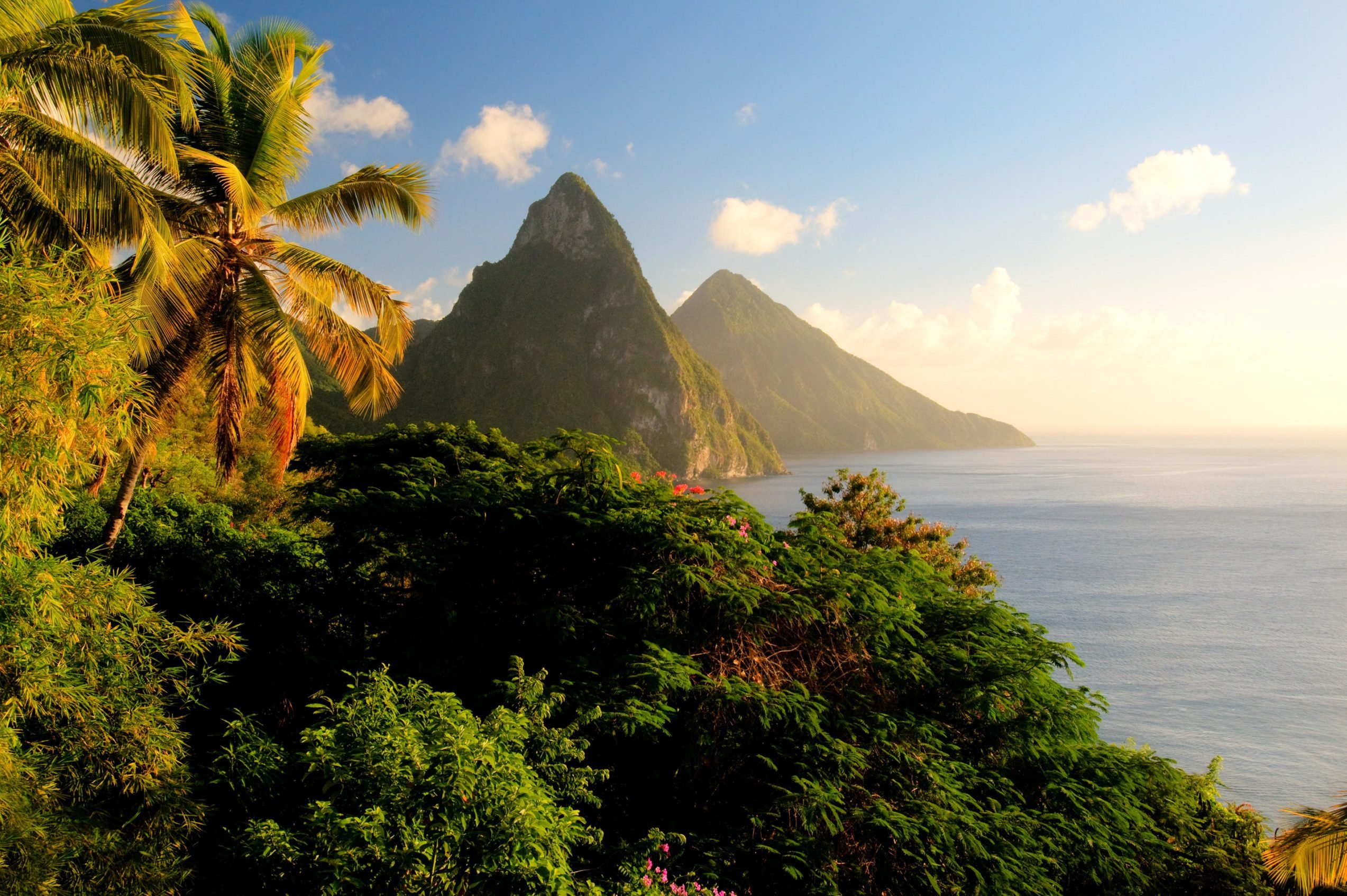
Near the town of Soufriere, on St. Lucia’s southwestern coast, this pair of mountainous volcanic cones are truly green and they’re also blessed in being covered with a lush forest that is home to a number of rare plant species. Collectively they are recognized as a UNESCO World Heritage Site. However, each of these two spires has its own name and, well, “personality.” Gros Piton is the taller of the two while Petit Piton is shorter but also said to be steeper. These two spires can offer hearty challenges to those who wish to go up to them—a guide is a must—but also reward visitors for their efforts in reaching their summits with mesmerizing views. From the top of Gros Piton, you can see Petit Piton and Soufriere; Petit Piton will have you overlooking the Piton Bay.
4. Vermilion Cliffs National Monument, Arizona
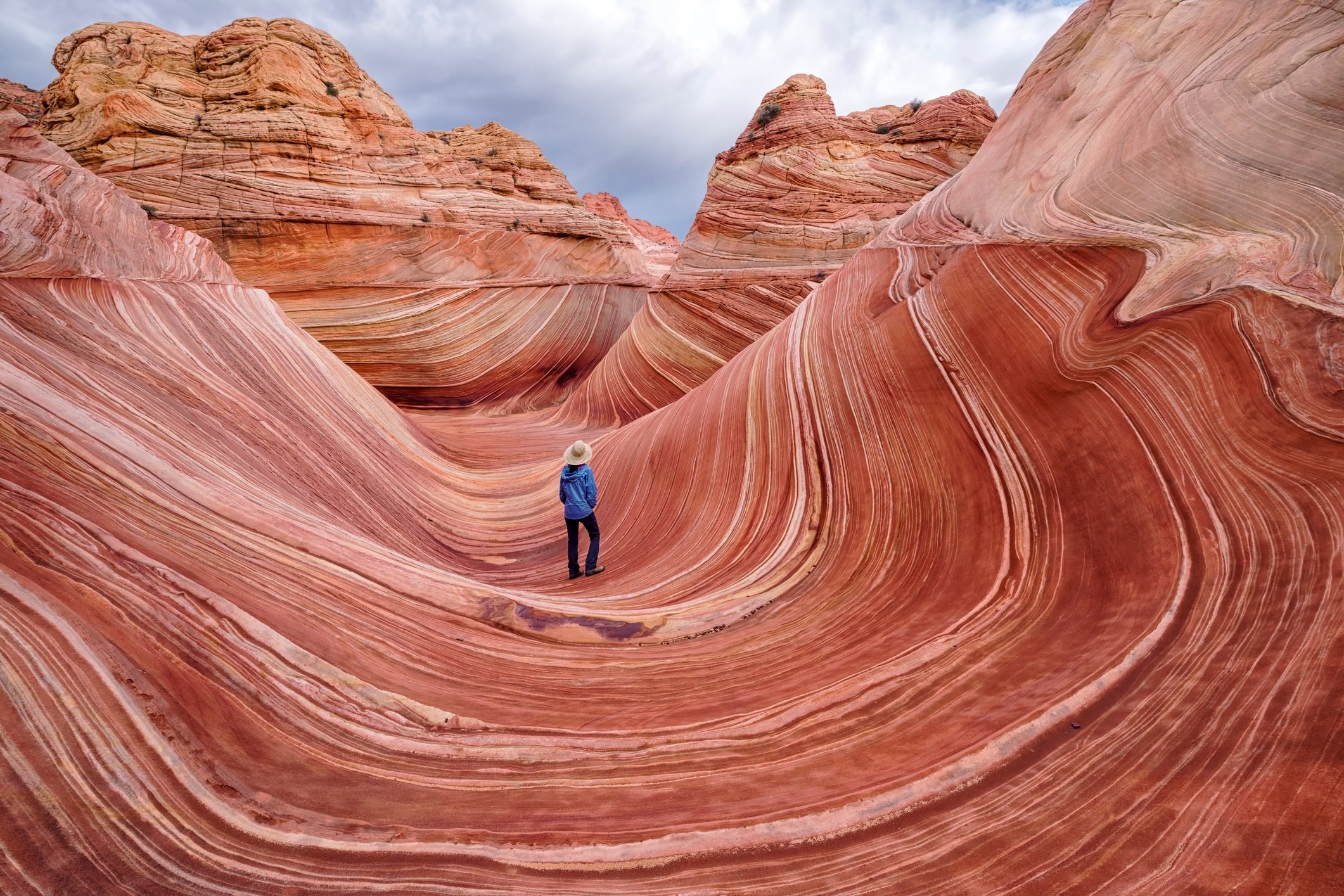
Designated in 2000, this 280,000-acre national monument in Northern Arizona and near the Utah state line makes you feel like you’ve stepped onto another planet. Towering cliffs, slot canyons, and churned colored sedimentary formations are found across this site’s many regions. But wait a minute: There are certain areas that require obtaining specific permits in advance to explore them, so do your homework first. Coyote Buttes are split into Coyote Buttes North, which has The Wave, a swirling sandstone formation, the Melody Arch, and the Grotto, while Coyote Buttes South is also visually striking with Paria Canyon and its petroglyphs.
5. Zhangye National Geopark, China
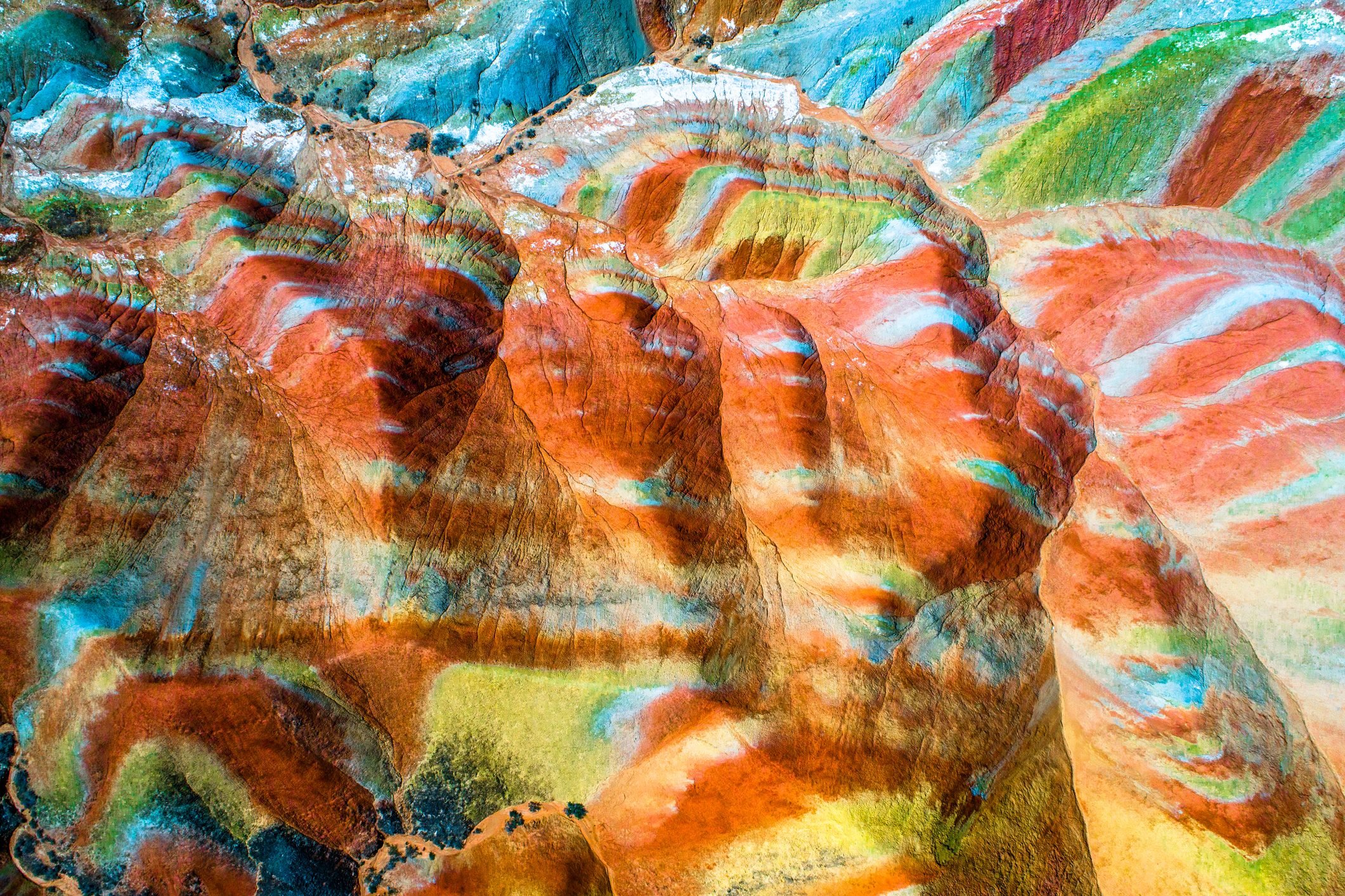
In northwestern China’s province of Gansu, within the foothills of the Qilian Mountains, this UNESCO national park is considered to be one of China’s most beautiful natural wonders. At first glance, it looks like a rainbow was carefully applied to a palette. And there’s a science to it. The striped colors within the 200-mile colorful rainbow mountain have been around for quite some time, in that they are comprised of deposits of cretaceous sandstones and siltstones that developed before the Himalayan Mountains were formed. These sand and silt deposits also held iron and trace minerals which created these vivacious color formations. Then, as Indian and Eurasian tectonic plates collided into each other millions of years ago, mountains were lifted up and underneath sedimentary rock got exposed, thus leading to this color scheme that’s still bright.


No comments:
Post a Comment