
Men’s fascination with the aurora borealis, referred to as the northern lights, dates all the way back to the 4th century when Aristotle the Greek philosopher documented his theory on this phenomenon. In the year 1621, a French scientist by the name Pierre Gassendi came up with the name “Aurora borealis” a term that is used today.
Aurora was named after the Roman goddess of dawn, while the word borealis derived its name from the Greek word for the north wind.
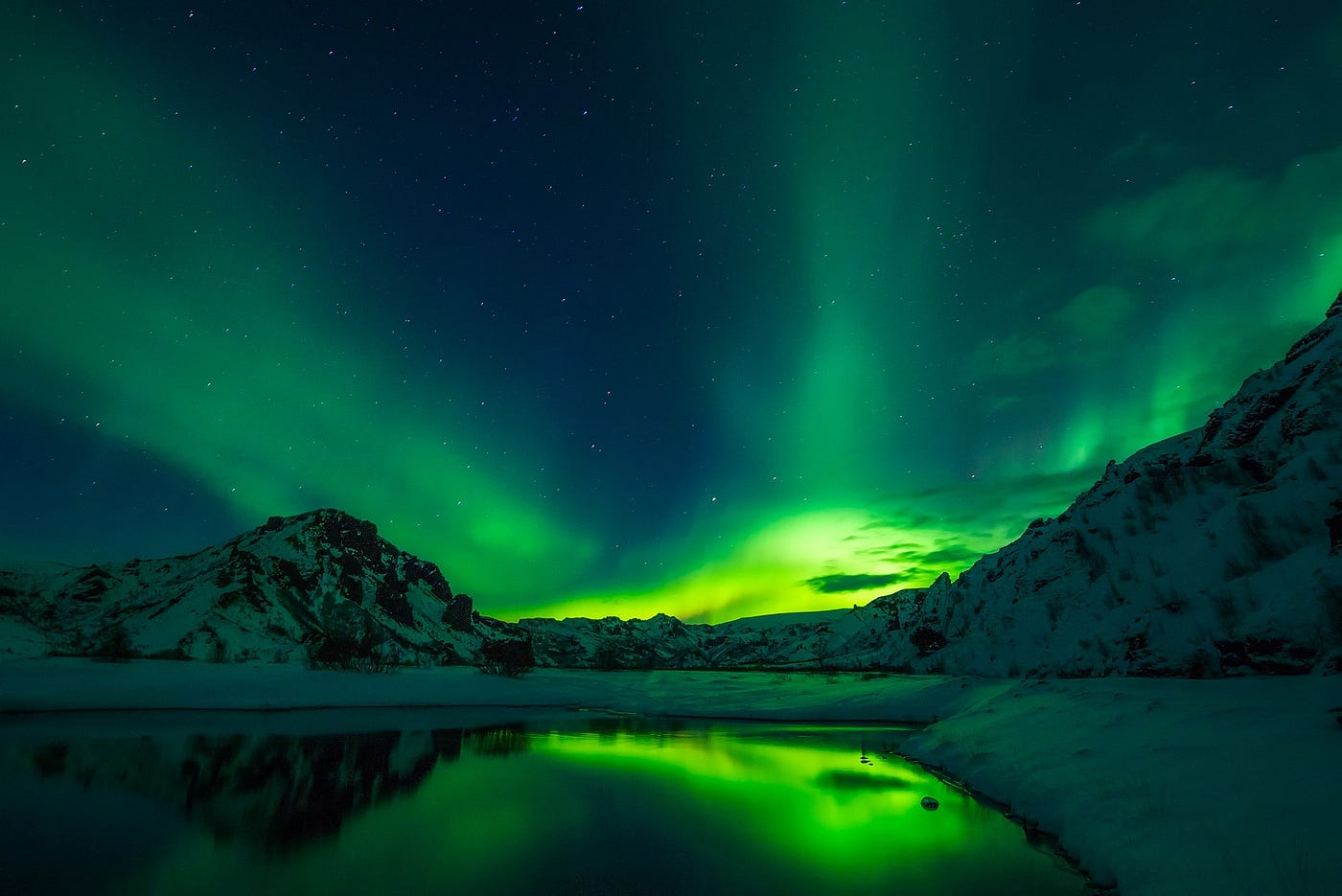
What causes this phenomenon? Some in scientific circles believe that the auroras receive power from the sun’s rays. When electrically charged particles exit the sun and enter the earth’s magnetic field, part of the energy created in the upper atmosphere creates a spectacular light show. The colors change depending on how the electrons enter the atmosphere and which particular atoms are affected.
This spectacular display begins from 93 million miles away in our solar system. Large amounts of gas are hurled into space at lightning speed from nuclear explosions occurring on the sun. Auroras are associated with the solar wind, containing streams of high-energy particles that can reach the earth’s outer atmosphere within 24-48 hours.

As they enter the outer boundaries of the earth’s magnetic field, many charged particles are trapped, traveling toward the poles. When they collide with nitrogen molecules and oxygen atoms, energy is released in the form of auroras appearing in large circles around the poles, causing a display of lights.
However, this phenomenon occurs only between 50 to 400 miles above the earth’s surface. Shades of yellow and green are created by collisions with the lower altitude, while higher altitudes cause red and blue emissions. Some of the displays can be enormous, measuring up to 3 miles thick and over 100 miles high, extending for over a thousand miles.

A clear night sky provides the perfect backdrop setting for the ever-changing panorama of arches, patches, and rainbow shapes that flutter and sway in the sky.
Although scientists have not ruled out the possibility that the sounds are produced as a result of an aurora, it is unclear how significant disruptions could come from within these lights. This phenomenon occurs at a considerable distance from the earth.
Unfortunately, only a small percentage of the earth’s inhabitants will ever see these phenomena. People living in southern Greenland, Iceland, northern Norway, northern Siberia, the northwestern parts of Canada can witness the display of the aurora dancing lights as often as 100–240 nights a year depending on the region where they live.

However, residents of the southern region of Alaska will see the lights about 5 nights during the year. In the Southern Hemisphere, this celestial display of dancing lights is known as the aurora australis and can be seen by residents living in parts of Australia, New Zealand, and Argentina.
This phenomenon is such an addiction that people from as far away as China charter flights to the Canadian Northern Territories, just to see this awesome display the northern lights put on.


No comments:
Post a Comment